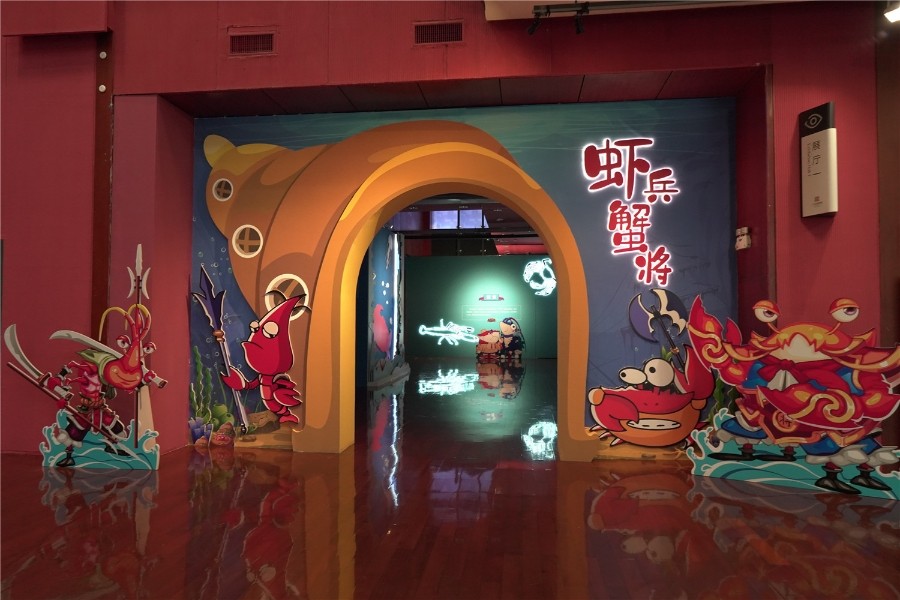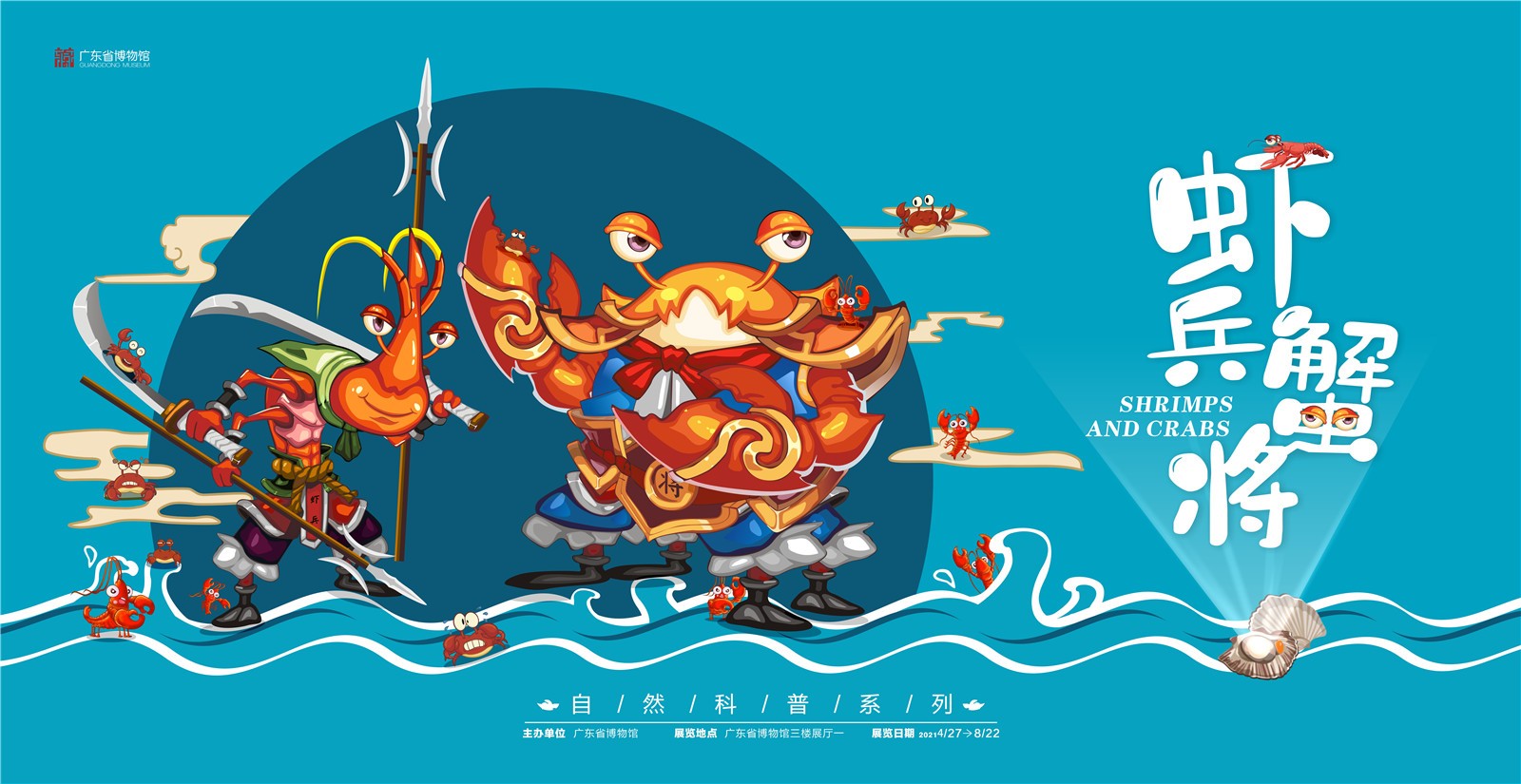
Shrimps and crabs belong to closely related groups of higher crustaceans. With their rostra and claws resembling those of swordsmen and warriors, they are affectionately called “the shrimp soldiers and crab generals”. Their bond with humans runs deep: they inspire literature and art, and they also have long been culinary favourites. From April 27 to August 22, 2021, the Guangdong Museum presented Shrimps and Crabs, an original exhibition celebrating this fascinating world.
Shrimps and crabs are common on our dining tables, yet the scientific knowledge behind them is often overlooked. This exhibition centres on their natural science, featuring 370 exhibits ranging from fossils and modern specimens to related cultural artifacts. Visitors can trace their origins, examine anatomical structures and behavioural patterns, and learn to distinguish the “true” shrimps and crabs from the many impostors whose names happen to contain “shrimp” or “crab”.
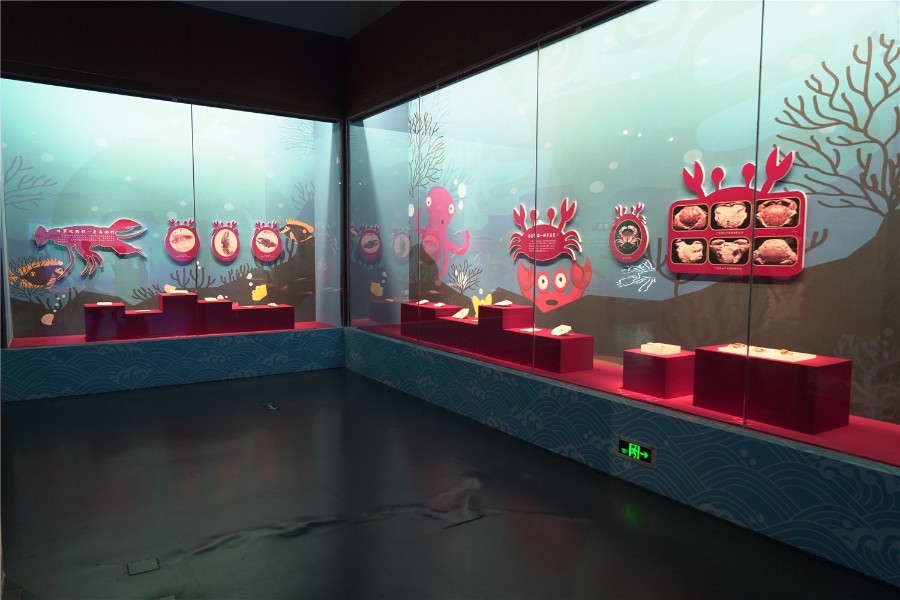
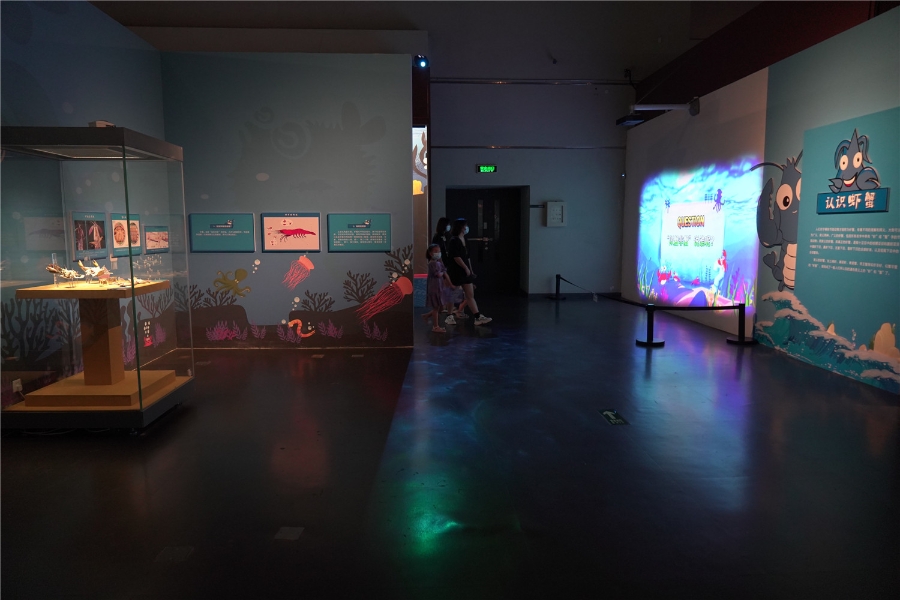
The exhibition consists of four parts: Part One, "Tracing the Origins of Shrimps and Crabs," uses a series of rare ancient fossil specimens to trace their ancestors and evolutionary path. Which came first, the shrimp or the crab? Did they swim first or crawl first? The visitors may find answers here. Part Two, "Knowing Shrimps and Crabs," presents basic knowledge. Through their morphology, basic characteristics, and habitats, the exhibition explains in detail which arthropods can be called shrimps and crabs. Part Three, "The 'True' and the 'False'," is the exhibition's highlight. Among the nearly 10,000 crustacean species with "shrimp" or "crab" in their names, only some members can be called true shrimps and crabs. By dividing shrimps into four major families and crabs into their main schools, the exhibition lists and displays nearly 50 types of modern shrimp specimens and 250 types of crab specimens, covering most common species and equipping the visitors with the skills to distinguish "true" from "false." Part Four, "The Culinary Culture of Shrimps and Crabs," enriches the exhibition's content, mainly displaying literature, food culture, and artistic creations related to shrimps and crabs, leading the visitors to appreciate the various interesting legends and culinary culture of shrimps and crabs in life through literature and art.
During the exhibition, curator's tours, academic lectures, and science education activities will be held, allowing the visitors to gain a more comprehensive understanding of the exhibition through various educational formats. At the same time, cultural and creative products and a 3D popular science picture book will be launched, allowing visitors to "take the exhibition home."
As vital components of Earth’s ecosystems, shrimps and crabs share the planet with us and countless other species. By showcasing their diversity, the exhibition encourages the protection of their habitats, biodiversity and our natural world.
Admission is free. The Guangdong Museum currently operates under a full-appointment, time-slotted admission system. Visitors must make a real-name booking in advance through the WeChat official account. Entry requires presentation of one’s original ID card, verification of the blue or green “Yuekang Code” or “Suikang Code,” wearing a mask, and passing a temperature check.
Highlights of the Exhibition
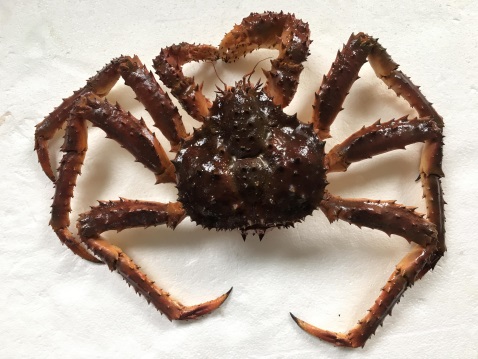
Paralithodes platypus
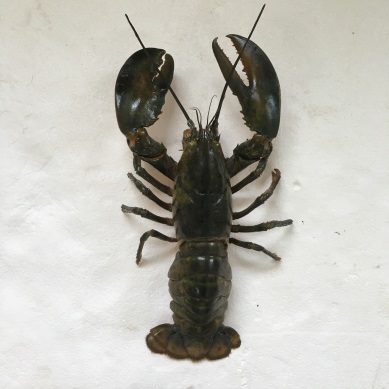
Homarus americanus
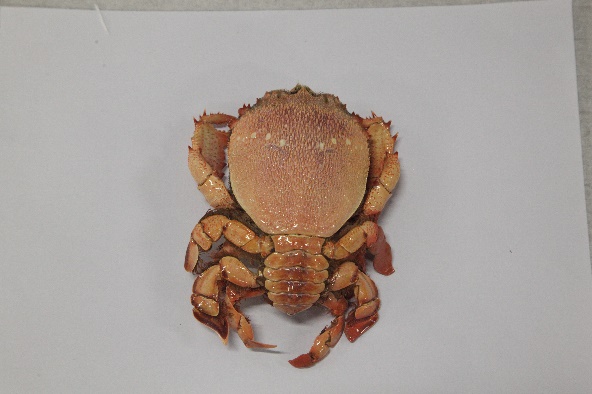
Ranina ranina
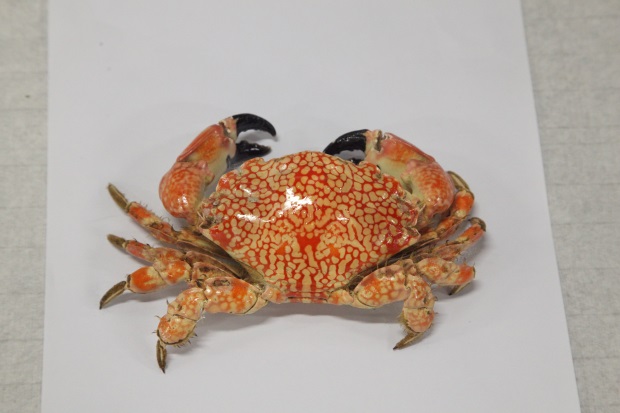
Lophozozymus pictor
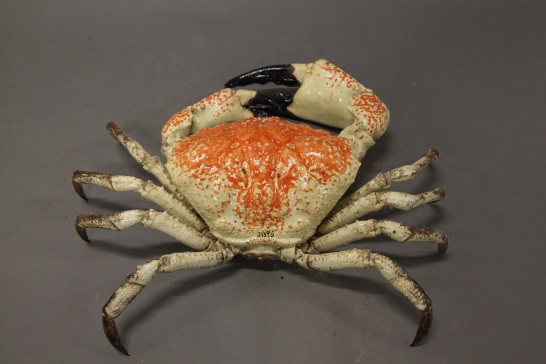
Pseudocarcinus gigas
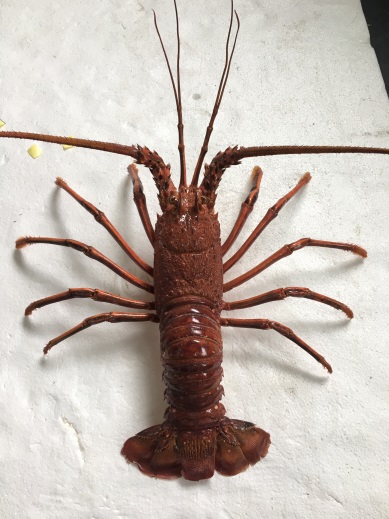
Panulirus cygnus
Exhibition Views