Brilliance of the Silk Road: The Joint Exhibition of Guangdong and Gansu
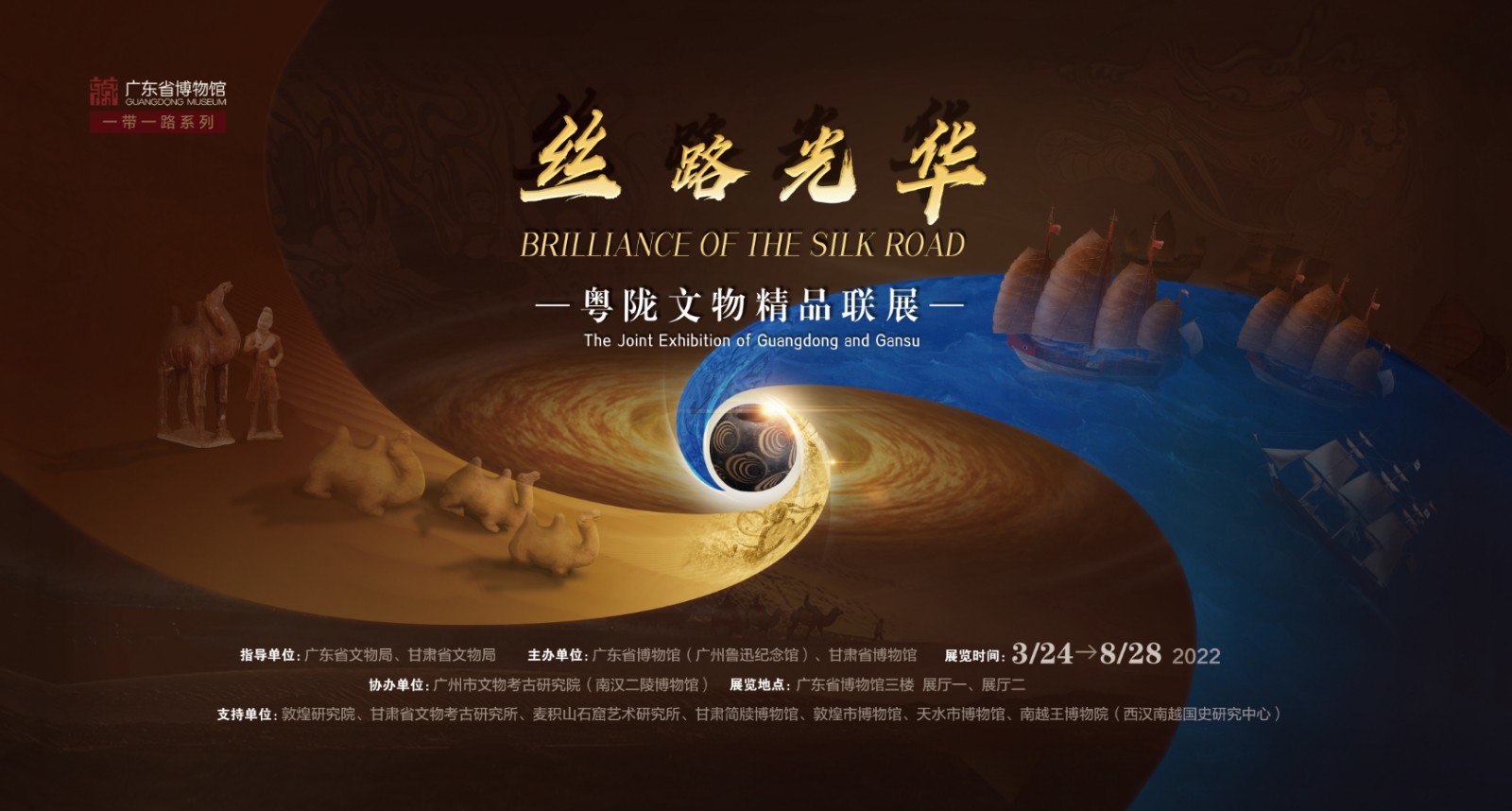
During the reign of Emperor Wu of the Han Dynasty, Zhang Qian was dispatched to the Western Regions, opening land routes to Central Asia. Envoys were also sent to states across the South China Sea. From then on, exchanges between the East and the West flourished, enriching and accelerating the progress of world civilization. In the Sui and Tang dynasties, China entered its second age of great unification following the Qin and Han dynasties. Dunhuang in the northwest and Guangzhou, the great port of the south, played crucial roles along the Silk Road. In the Song and Yuan dynasties, ethnic groups of the northwest blended and developed, while maritime trade in the south reached new heights. After the fifteenth century, with the advent of the Age of Discovery, Jiayuguan in Gansu and the Canton Customs became important points of Sino-Western cultural exchange. At several pivotal moments in history, the land and sea routes of the Silk Road developed independently yet echoed one another, jointly propelling ancient China onto the world stage.
Located in the northwest China, Gansu connected the Central Plains with the inland regions of Asia and served as a vital artery of the Land Silk Road. Guangdong, facing the vast Pacific in the south, was home to major maritime trade ports of the Maritime Silk Road. Separated by thousands of kilometers yet closely linked, the two regions share a deep and intertwined history.
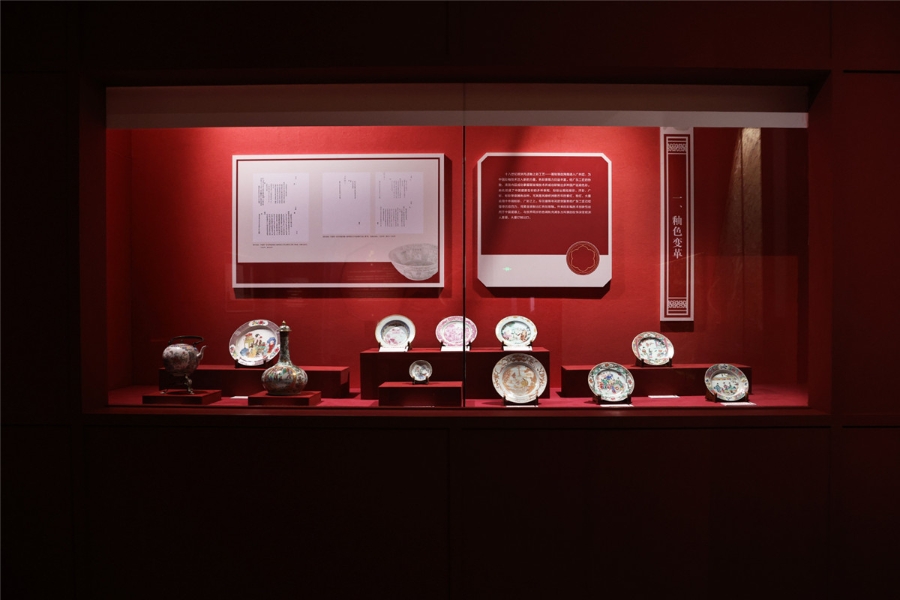
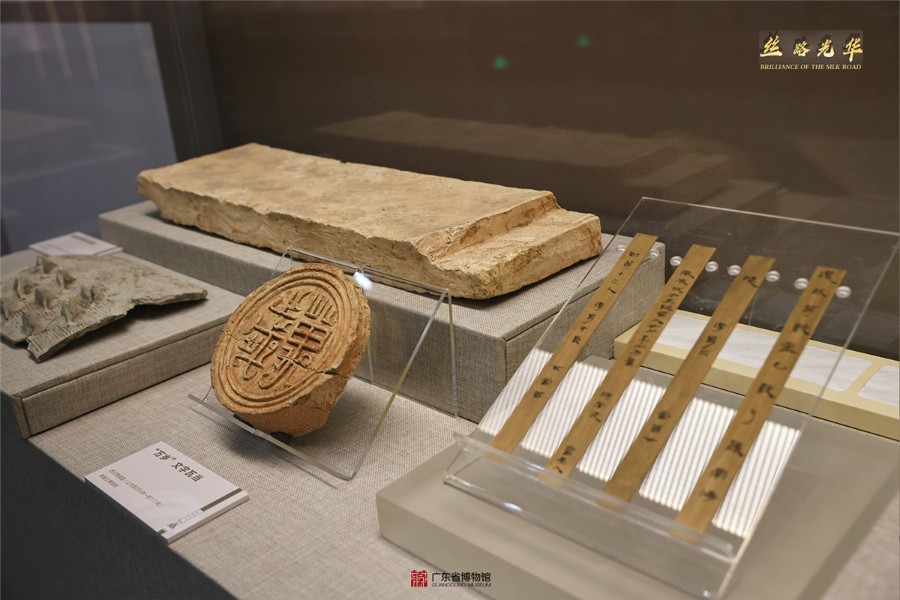
Drawing on selected cultural treasures from both provinces, Brilliance of the Silk Road: The Joint Exhibition of Guangdong and Gansu brings together more than 500 artifacts from cultural institutions in the two regions. Through a broad historical perspective, the exhibition interprets the intrinsic connections between north and south, introduces the history and origins of the Hexi Corridor in Gansu and the maritime trade routes of Guangzhou, and presents the cross-regional communication of ideas and technologies within the same historical context. It further illustrates how changes in the Silk Road profoundly influenced the development of Chinese civilization.
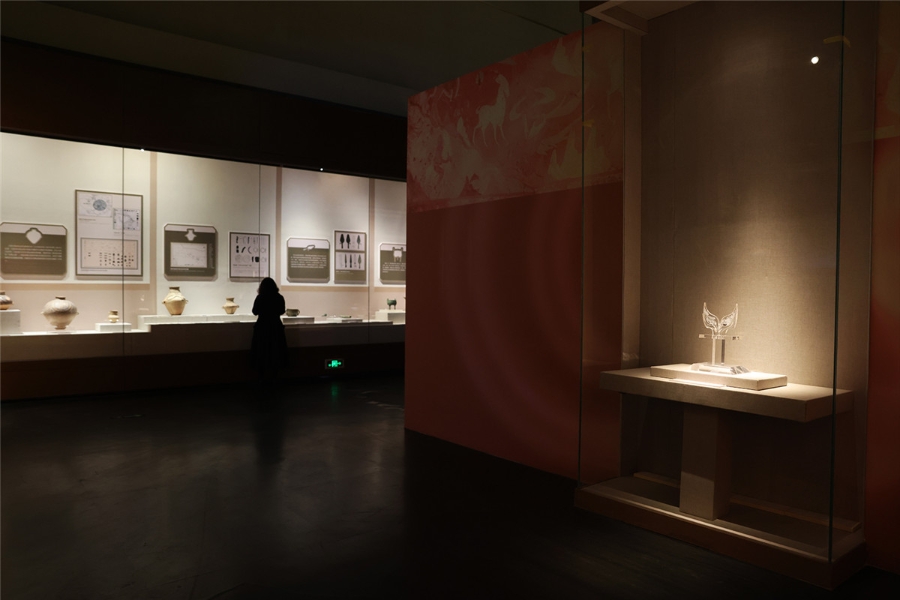
Under the guidance of the cultural heritage authorities of Guangdong and Gansu, the exhibition was jointly hosted by the Guangdong Museum (Guangzhou Lu Xun Museum) and the Gansu Provincial Museum, organized by the Guangzhou Municipal Institute of Cultural Heritage and Archaeology, with support from the Dunhuang Academy, the Gansu Provincial Institute of Cultural Relics and Archaeology, the Maijishan Grottoes Art Research Institute, the Gansu Jiandu (Bamboo Slips) Museum, the Dunhuang Museum, the Tianshui Museum, and the Nanyue King Museum (Research Center for the Nanyue Kingdom of Western Han). It was held from March 24 to August 28, 2022 in No. 1 and No. 2 Exhibition Halls on the 3rd floor of the Guangdong Museum. Many precious artifacts were displayed in Guangdong for the first time.
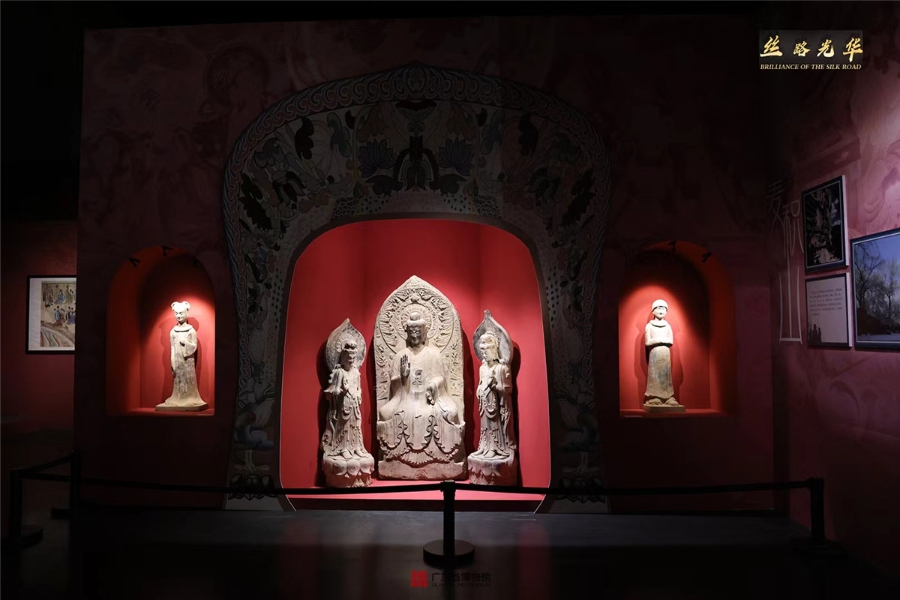
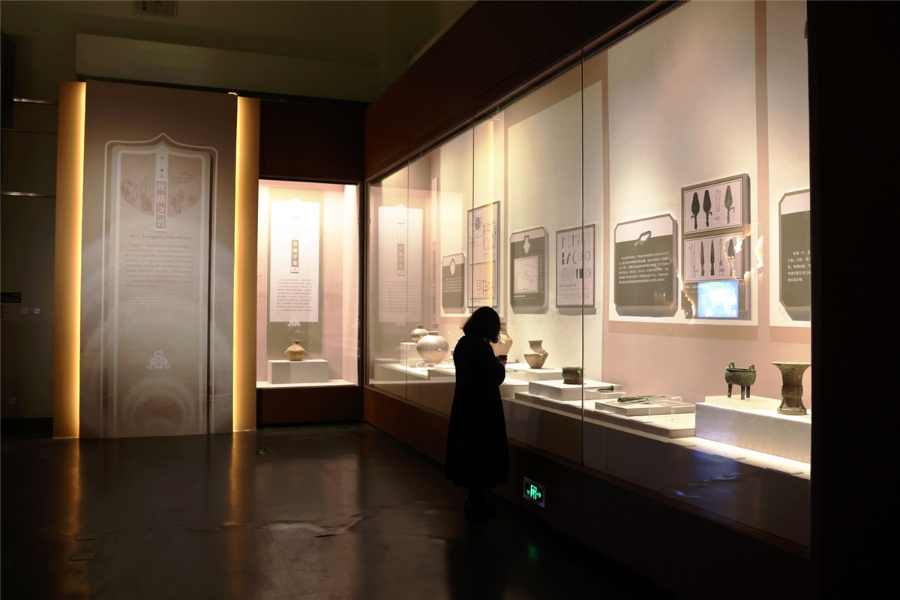
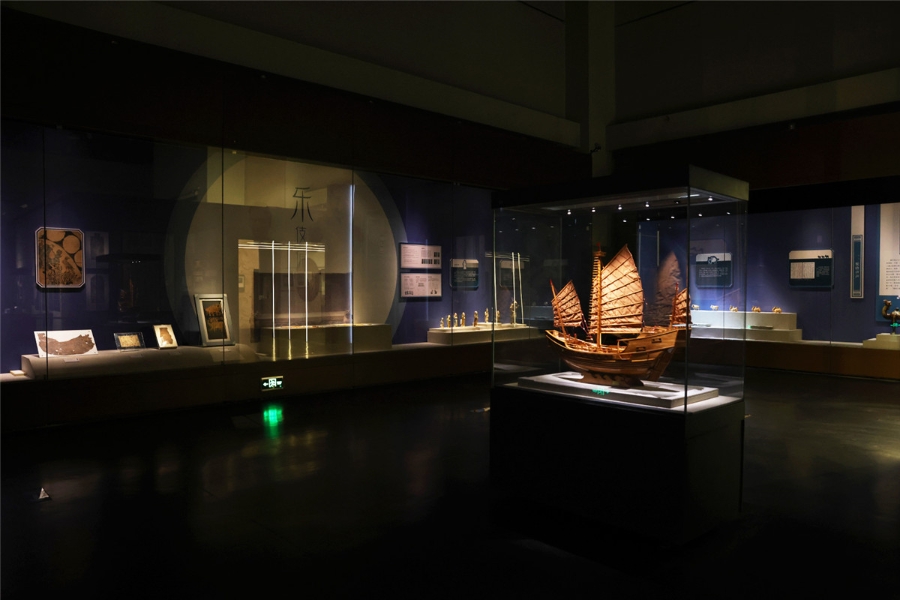
Exhibition design follows the characteristics of Silk Road development across different periods and combines artifact groupings to deepen visitors’ understanding of history within the context of the “Belt and Road Initiative” and to showcase the diverse civilizations connected by land and sea routes. The exhibition opens with two "dragonfly-eye" glass beads unearthed respectively in Gansu and Guangdong, inviting visitors to explore the cultural and artistic exchanges between East and West, and the north-south development of civilization. Combining artifacts with reconstructed scenes, the exhibition leads visitors through ancient postal stations buried in the desert, solemn and magnificent cave temples, and the winding Great Wall. Multimedia technologies integrating sound, light, and digital interaction create an immersive atmosphere. In the public area between No.1 and No. 2 Exhibition Halls, visitors may also observe the on-site reproduction of mural-painting techniques from cave temples, offering a direct insight into the creative process behind grotto art.
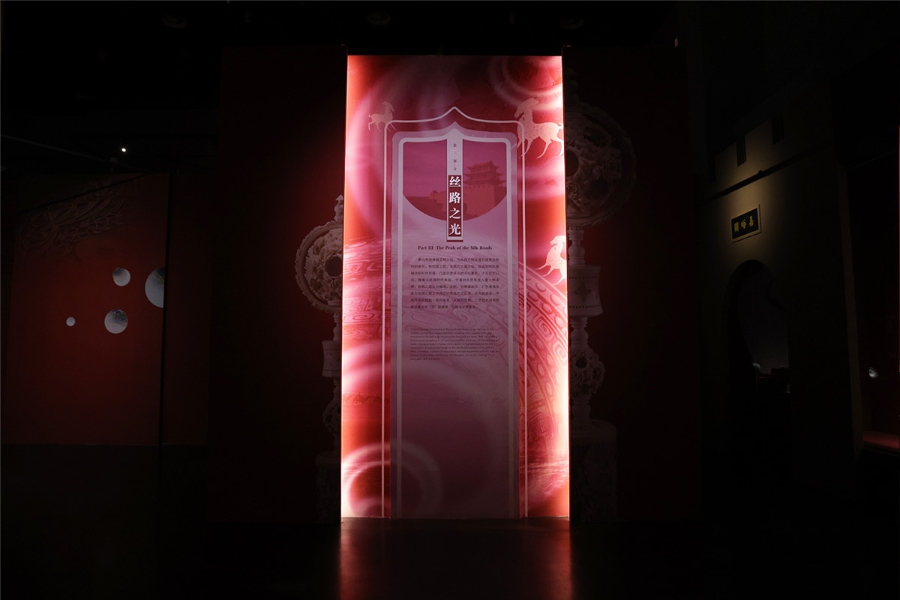
Structured chronologically and grounded in the latest archaeological discoveries and historical research, the exhibition is divided into three sections—Rise of the Silk Road, Prosperity of the Silk Road, and Radiance of the Silk Road—inviting visitors to witness the flourishing course of the Silk Road. For more information and related activities, please stay tuned for the updates in the official website, WeChat account, and Weibo of the Guangdong Museum.
The Guangdong Museum currently operates under a full-appointment, time-slotted admission system. Visitors must make a real-name booking in advance through the WeChat official account. Entry requires presentation of one’s original ID card, verification of the “Yuekang Code” or “Suikang Code,” wearing a mask, and passing a temperature check.
Highlights
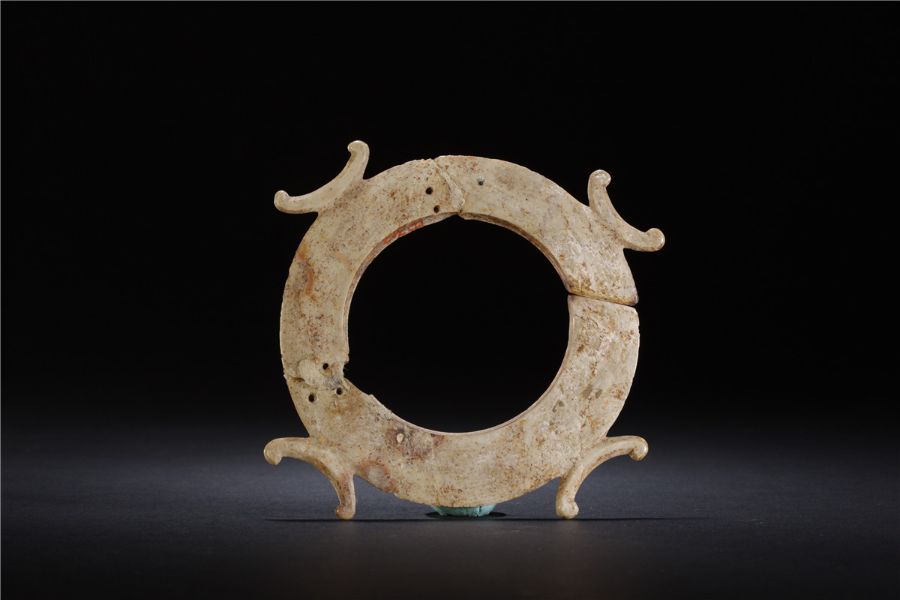
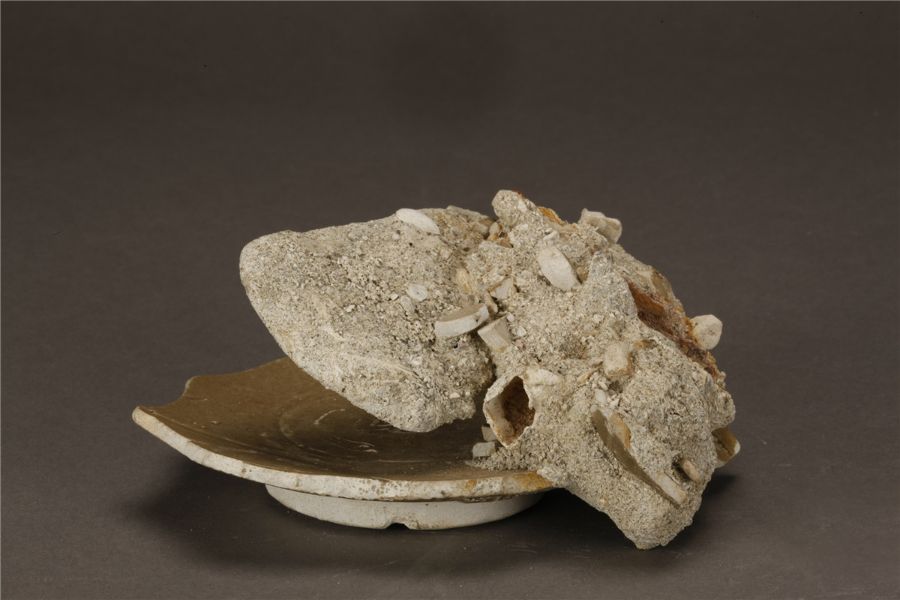
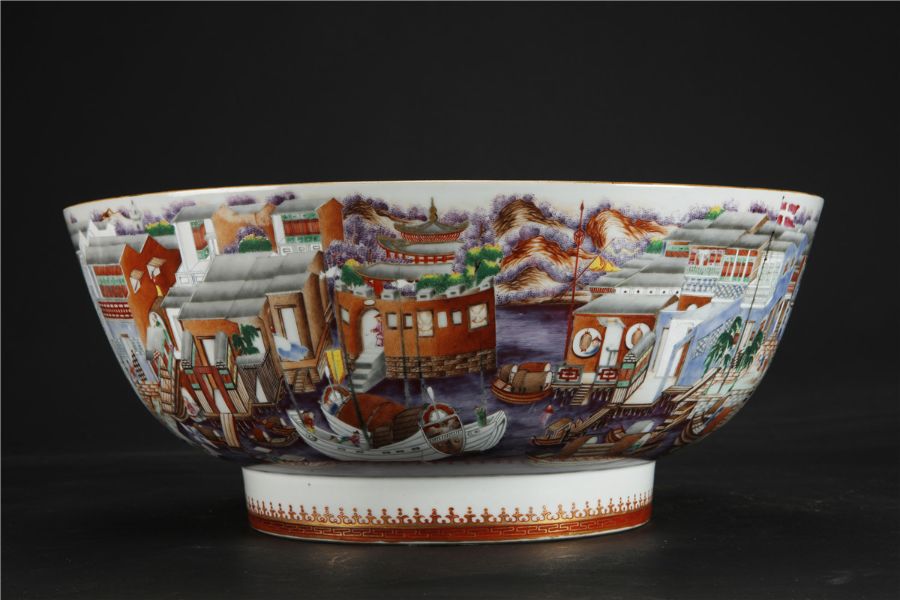
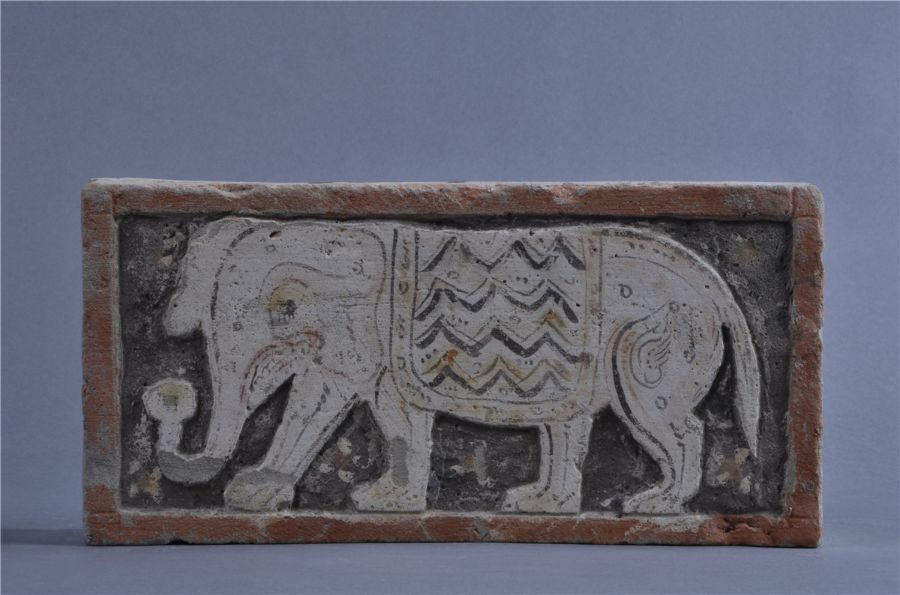
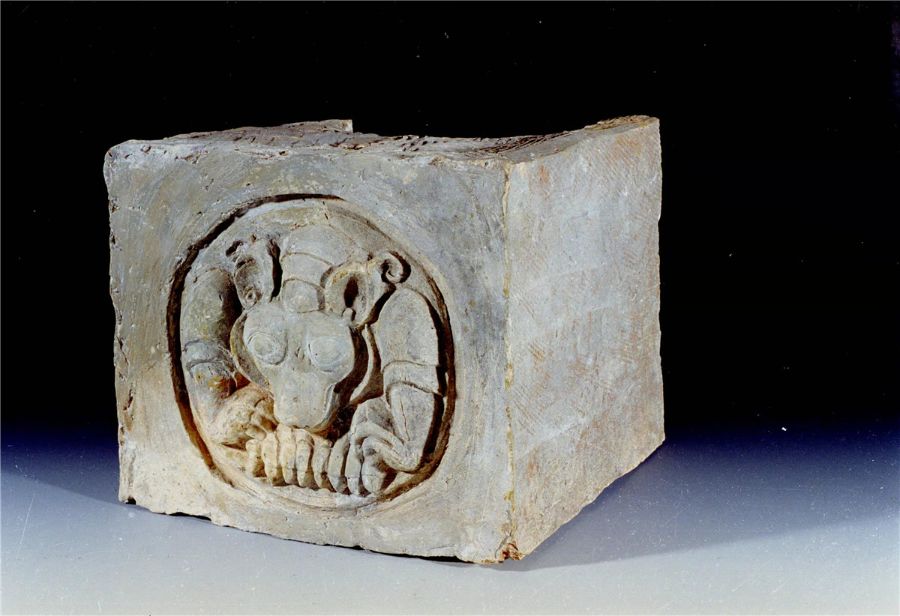
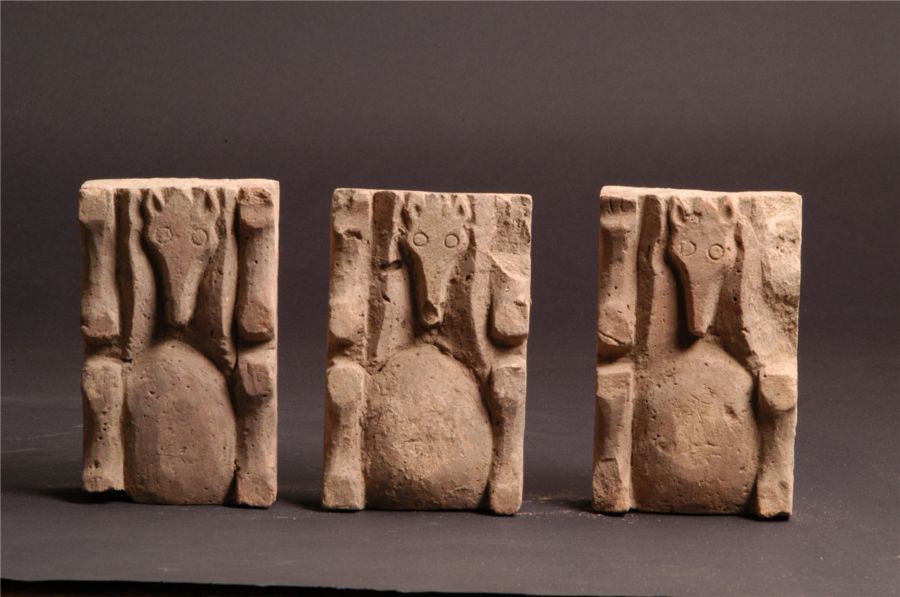
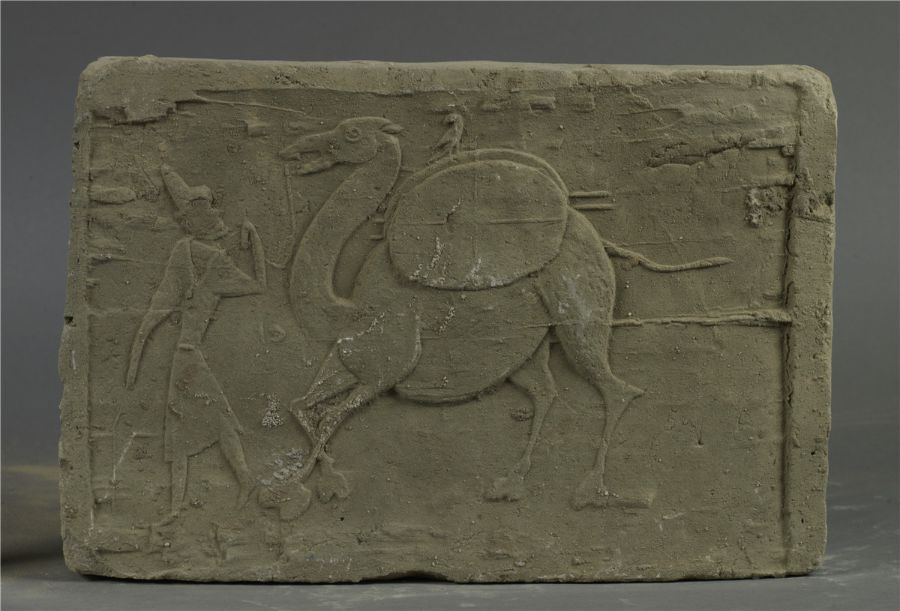
Exhibition Views