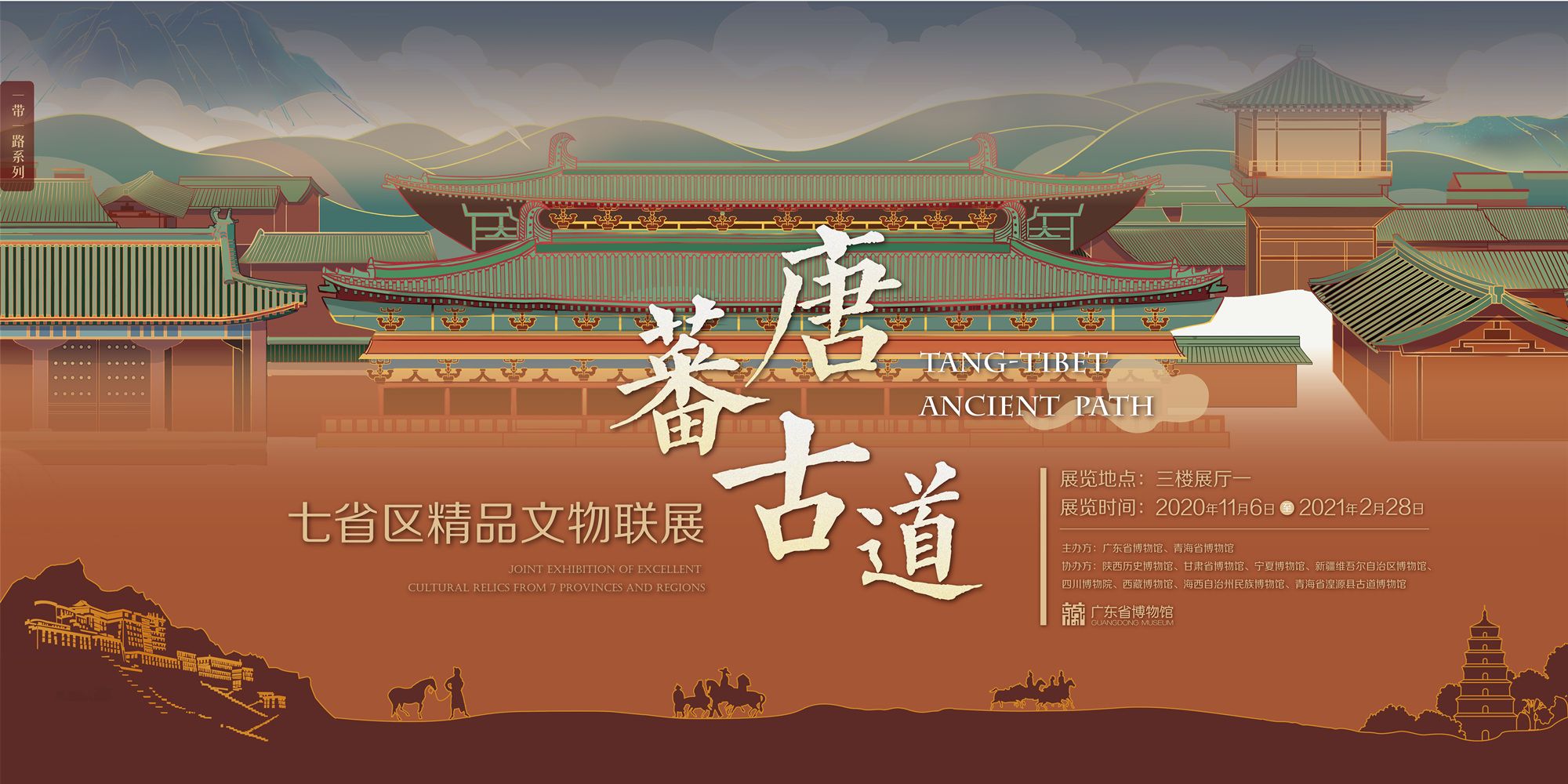
Tang–Tibet Ancient Path: Joint Exhibition of Excellent Cultural Relics from Seven Provinces and Regions
Northwest China, located along the upper reaches of the Yellow River, is one of the cradles of the Chinese nation. Prehistoric peoples created the brilliant painted-pottery culture, and early pathways expanded gradually as civilization spread. From the Qin and Han dynasties onwards, successive dynasties staged one magnificent historical story after another. Numerous ethnic groups and regimes interacted closely, fostering regional cultural exchange and mutual influence; ancient transportation routes took shape and developed within this dynamic. As a crucial component of social productivity, road networks were the lifeline of imperial governance.
In the early 7th century, the Tang dynasty and the Tibetan Empire established close relations, leading to the formation of the Tang–Tibet Ancient Path. Throughout the Tang dynasty, the two sides engaged actively across many fields, giving rise to the famed scene of “exchanges of gifts in gold and jade, envoys traveling to and fro, and enduring bonds of goodwill.” Stretching more than 3,000 kilometers from Chang’an to Lhasa, this path formed an important section of the southern branch of the land Silk Road. Spanning today’s Shaanxi, Gansu, Qinghai, Sichuan, and Xizang, it became, from the Tang onwards, a crucial corridor connecting inland China with Qinghai, Xizang, Nepal, India, and beyond. It served as a vital link sustaining interethnic relations, facilitating communication and fostering cultural integration among different ethnic groups.