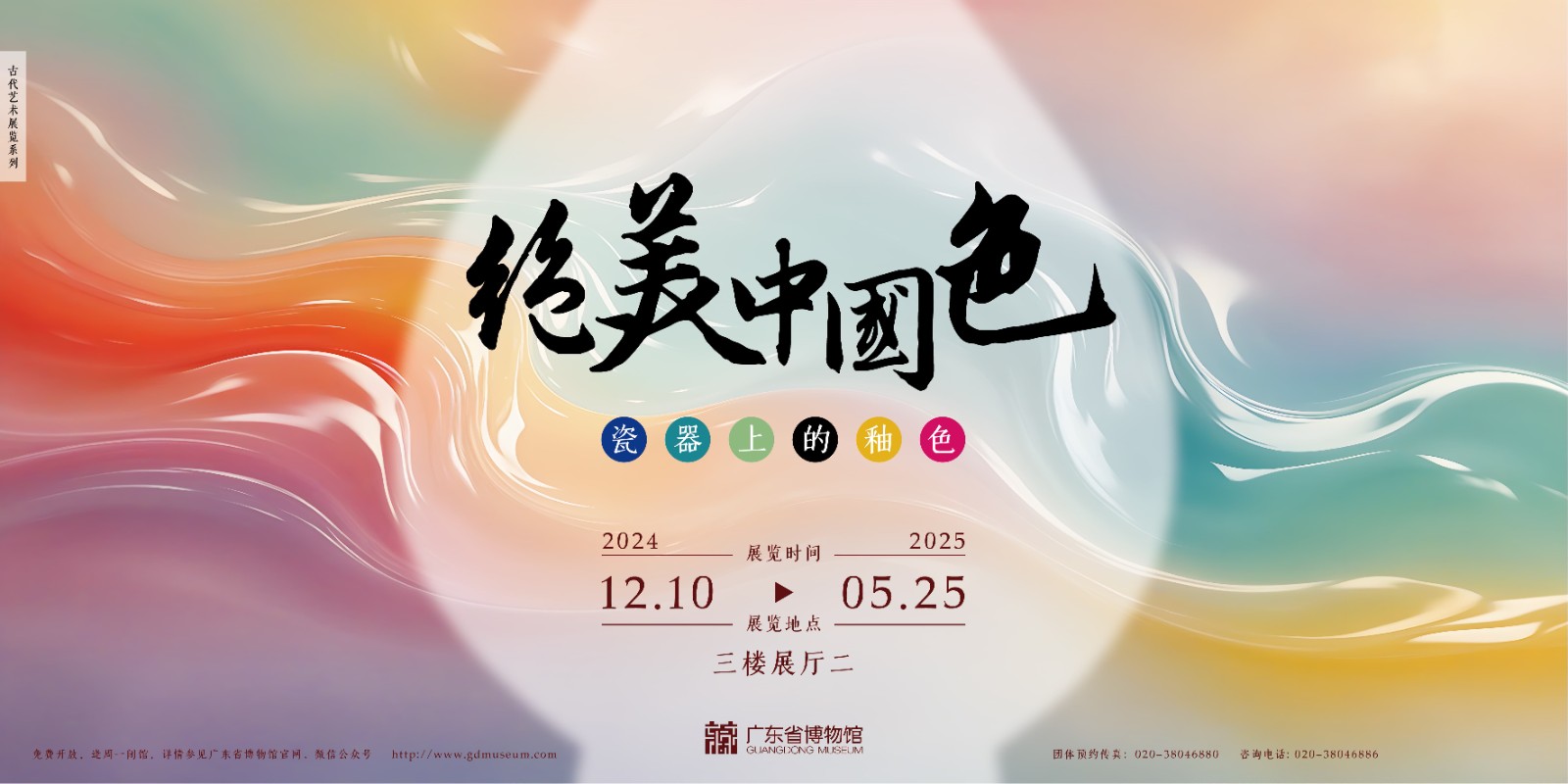
Porcelain (china), once synonymous with China, has shown the world a colorful Chinese culture through its diverse forms and ever-changing colors. Among them, monochrome-glazed porcelain is like a pearl hidden in time, emitting the gentle glow of traditional Chinese aesthetics from the depths of history's splendor. Exquisite Chinese Colors: Glazes on Porcelain, an original exhibition from the Guangdong Museum's "Ancient Art Series," officially opened to the public in the No. 2 Exhibition Hall on the 3rd floor on December 10, 2024, and runs until May 25, 2025.
This Exquisite Chinese Colors exhibition features a selection of over 200 monochrome-glazed porcelains from the museum's collection, including 13 national first-grade cultural relics, 142 second-grade, and 37 third-grade. More than half of these precious relics are being exhibited for the first time, including the Jingdezhen kiln turquoise-green glazed "gu" (beaker) with magnolia patterns, the Jingdezhen kiln yellow-glazed lidded jar (Kangxi era, Qing) and the Jingdezhen kiln white-glazed vase with carved chrysanthemum patterns (Yongzheng era, Qing). Some key artifacts are displayed on a rotational basis.
From darkness to light, ancient Chinese developed their earliest concepts of color—black and white.
With the rise of agrarian society, the earth’s nourishing power gave yellow its central role.
The vibrant green of mountains and waters became a favoured hue.
The brilliance of red signified dignity, sincerity, and vitality.
Over millennia, these five colors—white, black, yellow, green, and red—expanded into the intricate and radiant palette of traditional Chinese colours.

Organized into eight parts, the exhibition, classified by the traditional "five colors" system, traces the evolution of monochrome glazes: parts one through six sequentially display celadon, black-glazed, white-glazed, yellow-glazed, red-glazed, and "yaobian" (flambé) glazed porcelain. They showcase the unique charm and high artistic and aesthetic value of each glaze color, as well as the historical and cultural connotations they carry. Part seven, "How the Five Colors are Made," combines ancient texts with modern scientific knowledge to explain how porcelain gets its colorful glazes. Part eight, "Porcelain Color Wall," displays the results of a collaborative research project between our museum and the Design Trend Institute of Shanghai Jiao Tong University, analyzing the colors on porcelain using modern color science.
In terms of cultural and creative products, inspiration was drawn from the exhibits and glaze colors to develop over a dozen types and more than 80 products, including GDM's first-ever ceramic blind box, refrigerator magnets that cleverly combine porcelain with paintings from the collection, and handmade Shiwan-glazed ceramic coffee cups, allowing visitors to bring home the exquisite Chinese colors from the porcelain.
A series of academic lectures and educational activities are also held during the exhibition period, and several commemorative stamps are released. All are welcome to participate.
In the splendid world of porcelain, monochrome-glazed wares are like peerless beauties standing apart from the world. Undecorated by carving, they display a transcendent beauty through pure color and simple form. Through these shimmering works, visitors can rediscover traditional Chinese colours, appreciate the refined aesthetics of the ancients, and encounter the cultural spirit carried by these timeless hues.
Exhibition Views
|
|
|
|
Highlights
|
|
|
|
|
|