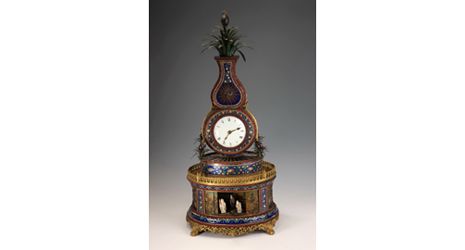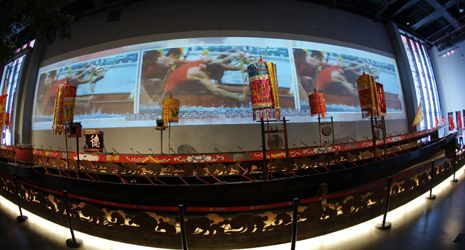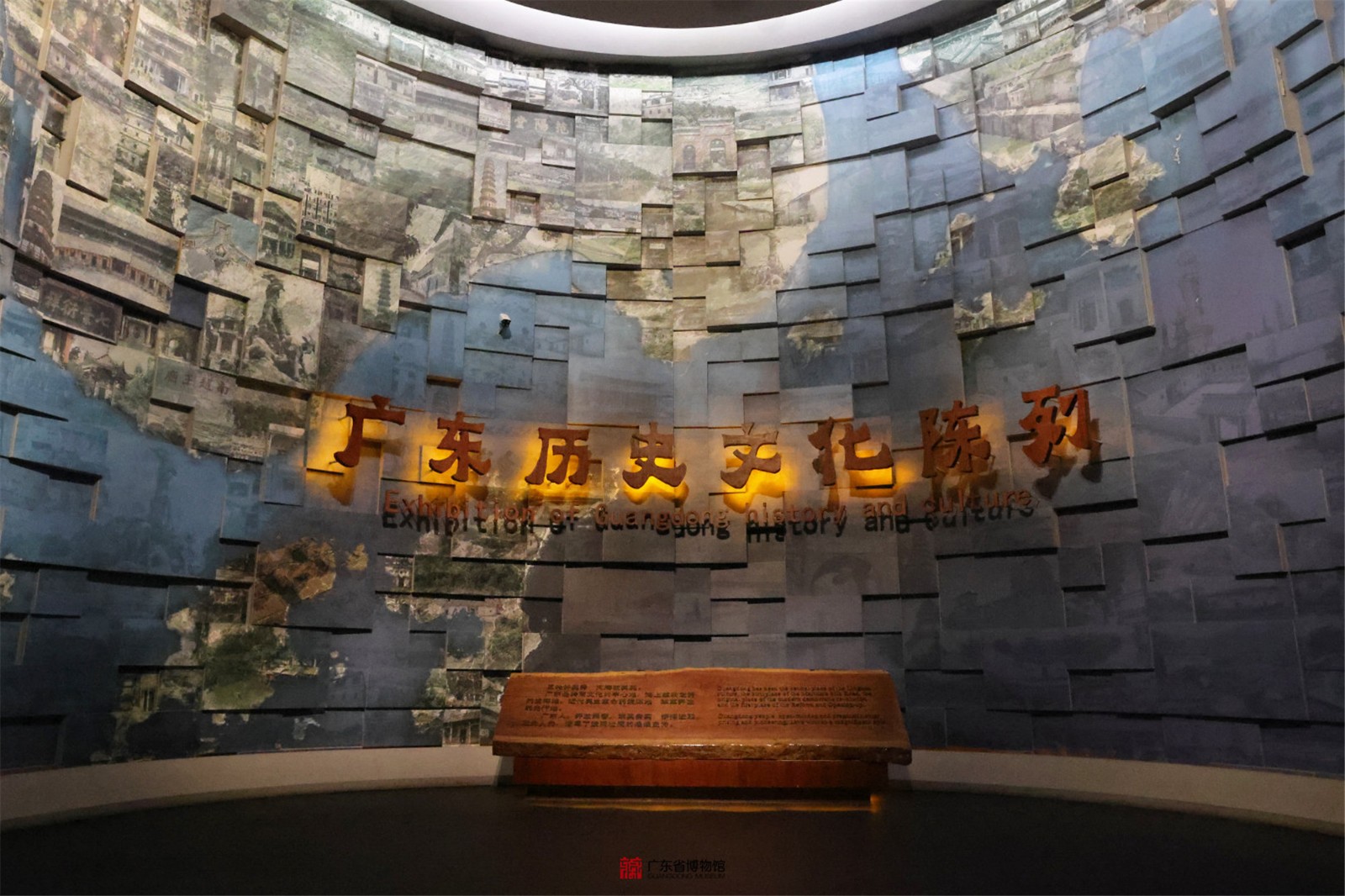
Covering more than 4,000 square meters, the Exhibition of Guangdong History and Culture features over 1,500 cultural relics (pieces/sets) and more than 300 photographs. As one of the three major permanent exhibitions of the Museum's new complex, it presents, through a wide range of exhibition media—artifacts, images, oil paintings, sculptures, models, multimedia displays, and reconstructed scenes—the evolution of Guangdong’s history and culture from the time of Maba man to the founding of the People’s Republic of China. Highlights include the 40-meter-long Liede Dragon Boat, the only known set of export wallpapers from Guangzhou discovered to date, an exquisitely carved ivory carrying box with openwork decoration, and a rare photo album of Beijing–Zhangjiakou Railway Construction signed by Zhan Tianyou himself.
With a commitment to historical authenticity and scientific rigor, the curatorial team, drawing on in-depth research into Guangdong’s history and culture, designed and structured the content to fully reflect the profound historical heritage and distinctive cultural characteristics of Guangdong. In terms of exhibition design, the combination of artistic elements such as the Guangdong land-and-sea map with embedded historical symbols, large-scale thematic oil paintings, murals integrated with architectural reconstructions, and sculptures of notable modern figures, imbues the exhibition with strong visual appeal and emotional power—everywhere expressing the pragmatic and pioneering spirit of Guangdong.
The exhibition is divided into four parts arranged chronologically: Origins of Guangdong, Sailing to the World, Forging Ahead with the Legacy, and Guangdong in the War Years.
Entering the preface hall, visitors are greeted by a magnificent Land-and-Sea Map of Guangdong. Projected onto a wall designed from a satellite image, symbolic elements representing Guangdong’s history and culture emerge across the land and the vast South China Sea, creating an innovative fusion of time and space.
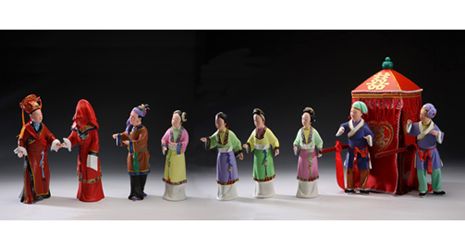
The first part, Origins of Guangdong, traces the origins of the people of Guangdong, the process of ethnic integration, and the formation of the province’s three major regional groups and their folk culture. Artifacts and reconstructions, such as the Maba human skull, double-shouldered stone tools, the oil painting of the Nanyue King, a Cantonese teahouse, the Liede Dragon Boat, Chaozhou Dawu clay figurines, and the Hakka walled village, allow visitors to experience a vivid, multi-sensory depiction of Guangdong through sight, sound, and touch.
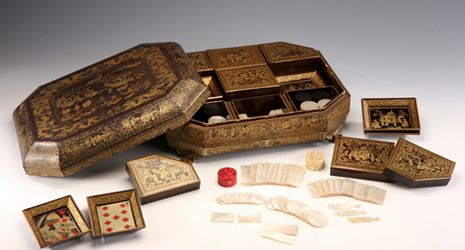
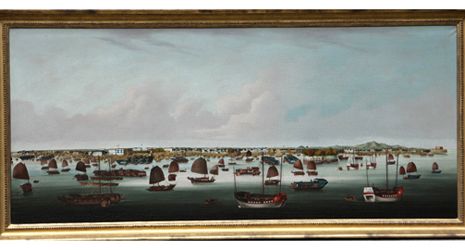
The second part, Sailing to the World, leads visitors onto the Maritime Silk Road to experience Guangdong’s brilliant history of openness and exchange. From Guangdong ships laden with porcelain to the bustling Thirteen Hongs filled with exotic goods, and from the exquisite craftsmanship of Canton enamel, Canton-style ivory carving, and export paintings to the fusion of Chinese and Western styles, every detail testifies to Guangdong’s spirit of openness and inclusivity.
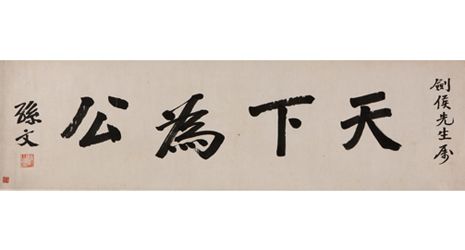
The third part, Forging Ahead with the Legacy, brings together the stories of Guangdong’s trailblazing figures who transformed modern Chinese history— patriots resisting British aggression, advocates of the Self-Strengthening Movement, leaders of the Hundred Days Reform, pioneers of the Xinhai Revolution, architects of the KMT-CPC Cooperation, and trailblazers of national industry and commerce. These reformers and visionaries shine like stars across the land of Guangdong.
The fourth part, Guangdong in the War Years, recounts the struggle of Guangdong’s soldiers and civilians during the War of Resistance Against Japan. Through a series of black-and-white photographs, it evokes the unyielding revolutionary spirit of the people of Guangdong.
Echoing the Land-and-Sea Map of Guangdong in the preface hall, the exhibition concludes with a panoramic view of the boundless South China Sea— vast, all-embracing, and ever-flowing—symbolizing the people of Guangdong, bearers of a millennia-old civilization, striding forward with hope to embrace the world and the future.
Highlights of the Exhibition