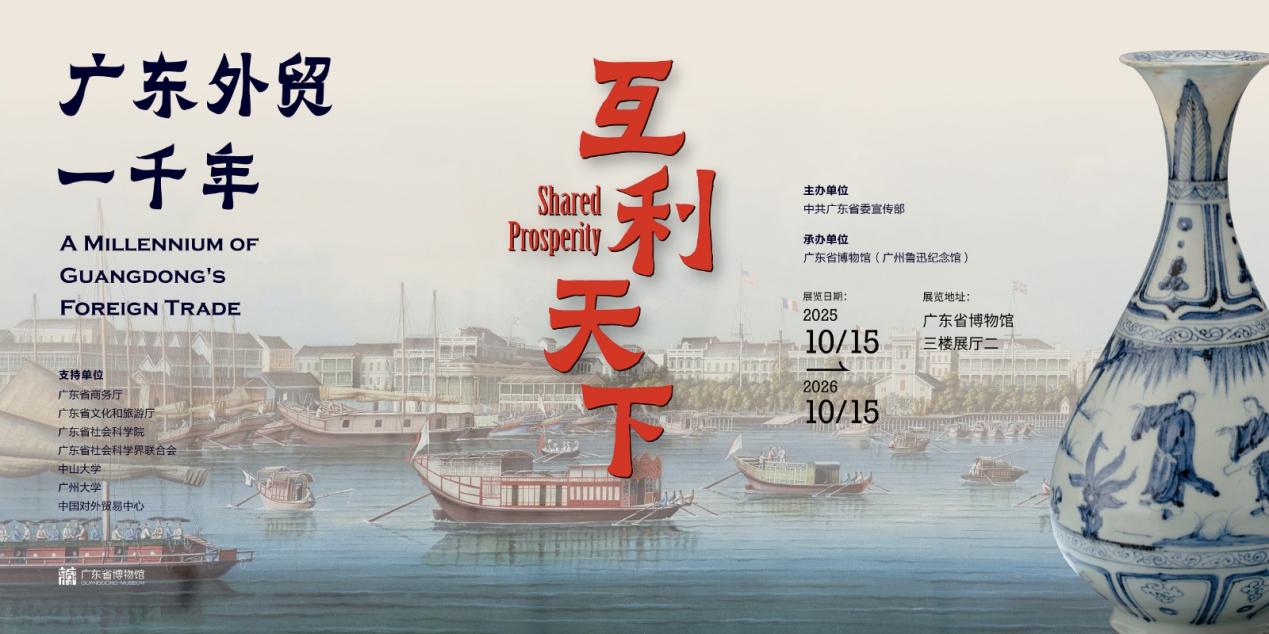
The exhibition Shared Prosperity: A Millennium of Guangdong’s Foreign Trade officially opened at Guangdong Museum on October 15, 2025, and will run until October 15, 2026. Organized by the Publicity Department of the Guangdong Provincial Committee of the Communist Party of China and curated by Guangdong Museum, the exhibition meticulously selects over 200 pieces (sets) cultural relics from Guangdong Museum and various cultural institutions nationwide. Centering on Guangdong’s thousand-year evolution in foreign trade, it employs dual narratives of material evidence and institutional development to comprehensively showcase Guangdong’s pivotal role and enduring influence in China’s foreign trade history, initiating a dialogue spanning millennia on maritime trade civilizations.
Guangdong: The Vanguard of China’s Foreign Trade
Guangdong has served as a "vanguard" in China's foreign trade history. Strategically positioned along the South China Sea and south of the Nanling Mountains, it leveraged its natural advantages—mountains and seas as protective barriers, rivers as vital arteries—to navigate historical tides. From the inception of the maritime trade system during the Tang and Song dynasties, through the zenith of the "Canton System"(Single-Port Trade) in the Qing Dynasty, to the establishment of the Canton Fair in New China and the contemporary development of Free Trade Zones and the Greater Bay Area, Guangdong has consistently pioneered open opportunities, mirroring both national progress and global shifts.
Titled "Shared Prosperity", this exhibition unfolds across four thematic chapters:
1. "Prosperity through Maritime Trade" (Shibo Libang)
2. "Merchant Ships in Their Myriad" (Shangbo Yunji)
3. "Where East Meets West" (Zhongxi Jiao Hui)
4. "New Chapters" (Chao Yong Xin Zhang)
Together, they comprehensively trace Guangdong's evolution from the embryonic stages of trade systems to its current role as a global hub.
"Prosperity through Maritime Trade" highlights Guangdong's pioneering contributions to the foreign trade management system during the Tang and Song Dynasties, exemplified by the establishment of the Maritime Trade Commissioner in the Tang Dynasty, the implementation of the " Code of Guangzhou Maritime Bureau" in the Song Dynasty, and the promulgation of the "Maritime Trade Law" in the Yuan Dynasty. This section showcases the institutional evolution from local practices to national codification.
"Merchant Ships in Their Myriad" demonstrates Guangdong's breakthroughs in tributary trade and commercial maritime transformation during the Ming Dynasty, including the adoption of the "Guangzhou Precedent" and the formation of the Guangzhou-Macao trade framework, revealing institutional adaptability and market dynamism.
"Where East Meets West" reconstructs Guangdong as the pivotal stage for Sino-Western trade and cultural exchange during the Qing Dynasty, focusing on the Canton System, the Guangdong Customs framework, and the Thirteen Hongs trade. Export artworks vividly reflect the dialogue among different civilization.
"New Chapters" narrates Guangdong's continuities and leaps in foreign trade since the founding of the People’s Republic of China in 1949, from the inception of the Canton Fair to the development of Free Trade Pilot Zones and the Guangdong-Hong Kong-Macao Greater Bay Area, underscoring Guangdong's vanguard role in China's high-standard opening-up.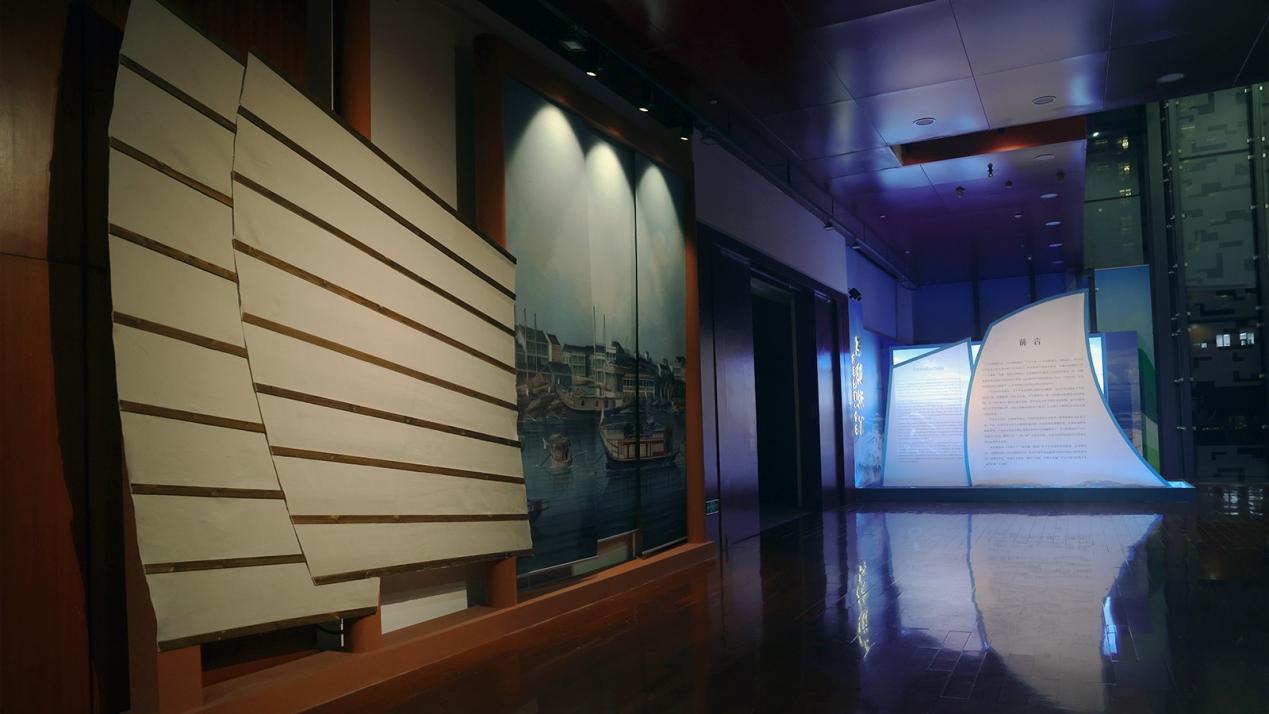
Highlight Collections
This exhibition showcases a remarkable assemblage of significant cultural relics, including:
- Ivory-carved Figurines,Tang Dynasty, Unearthed at the Site of Nanyue Kingdom Palace, Guangzhou
- Blue-and-White Yuhuchun Vase with Figural Design,Yuan Dynasty
- Gold Ingot,Ming Dynasty,Unearthed from the Tomb of Prince Liangzhuang of Ming Dynasty
- Hand-Painted Export Wallpaper Depicting Agriculture and Commerce in Guangzhou,Qianlong Era, Qing Dynasty
Beyond artifacts, it employs archival documents, infographics, scene reconstructions, and multimedia interactives to vividly recreate historical trade environments.
In terms of design, the exhibition strategically merges immersive experiences with scholarly rigor. Key historical junctures are emphasized through typography, color coding, and timelines.The exhibition also equipped with interactive touchscreens to present Guangdong's trade history with animated narratives, enhancing visitor engagement through participatory learning.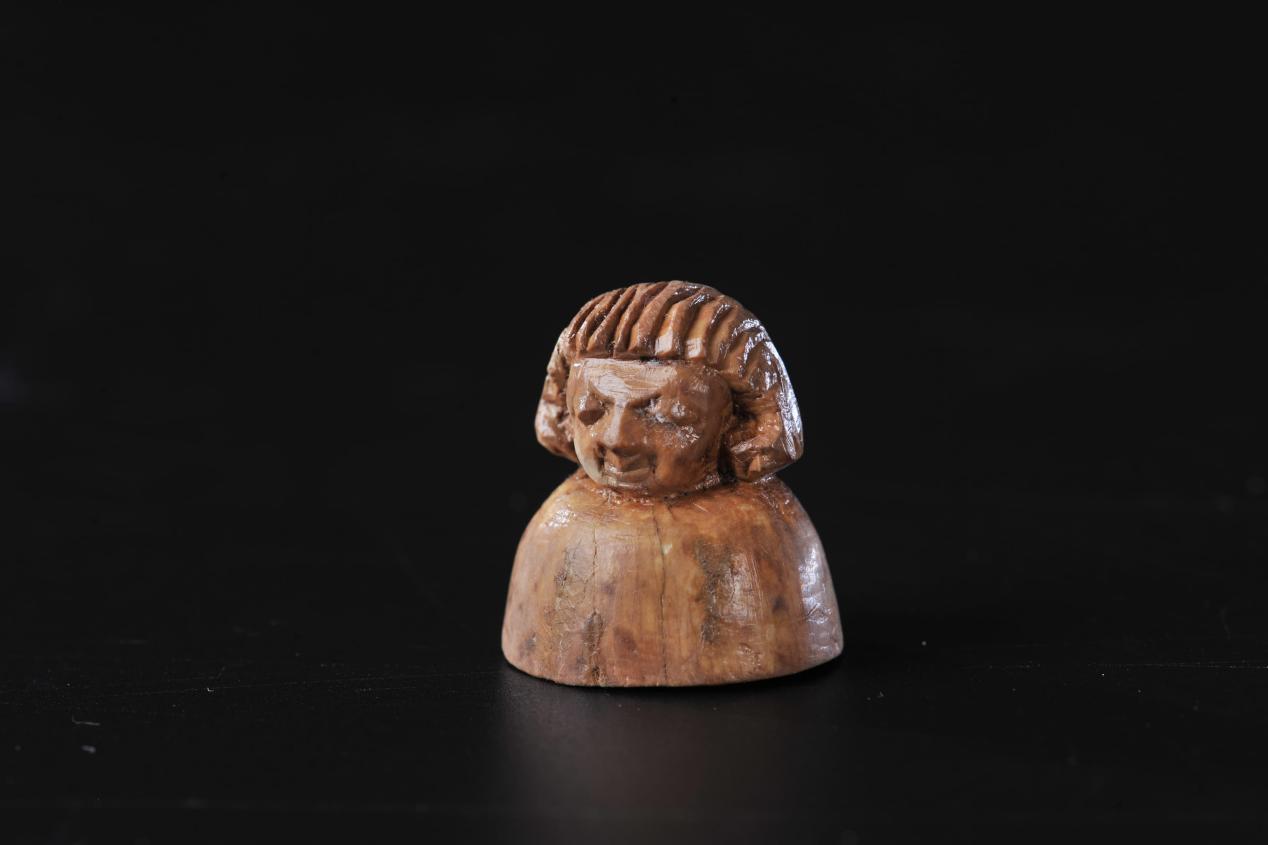

For millennia, the ocean tides have surged ceaselessly, while trade routes spanned thousands of miles. The exhibition "Shared Prosperity: A Millennium of Guangdong's Foreign Trade" systematically reviews and showcases Guangdong's magnificent history of maritime trade, learning from the experience of openness, inclusiveness, and mutual benefit. We invite visitors to explore these narratives at the Guangdong Museum—where precious artifacts convey the warmth of history, and the wisdom of ancient trade routes inspires contemporary openness. Together, let us witness Guangdong sailing forward into a new era, writing new chapters in global exchange and cooperation.